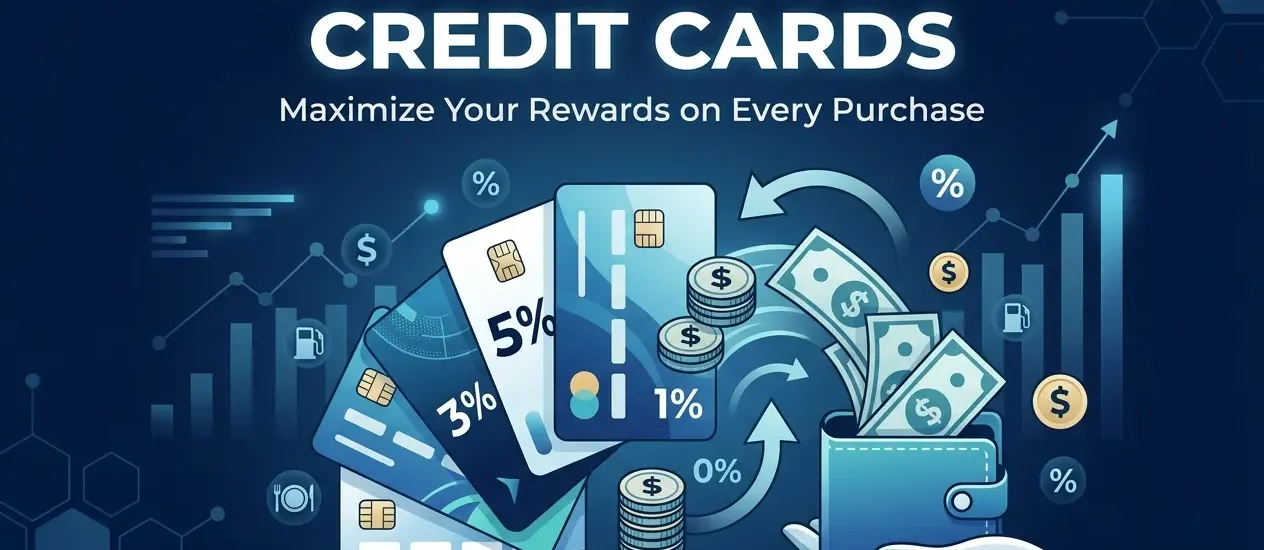
If you spend money every day — and who doesn’t — you might as well get paid for it. Cashback credit cards are one of the simplest and most rewarding financial tools available to Americans in 2026. Every time you swipe, you earn a percentage of your spending back in cash. No complicated points systems. No confusing redemption rules. Just real money back in your pocket.
But with hundreds of cashback cards on the market, choosing the right one can feel overwhelming. The best card for you depends on your spending habits, your credit score, and what you value most — whether that is a flat rate on everything, bonus rewards in specific categories, or a generous welcome offer to get started.
We have done the research for you. Here are the best cashback credit cards of 2026, carefully selected to help every type of spender find the perfect fit.
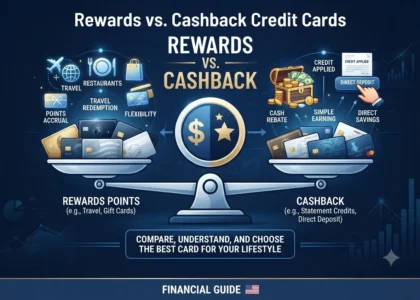
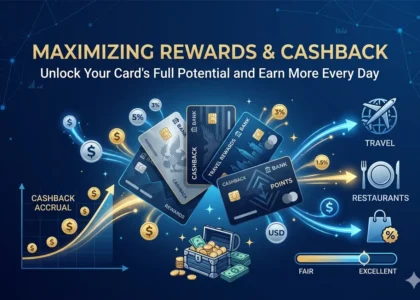
A cashback credit card rewards you with a percentage of every purchase as cash. For example, if you have a card that earns 2% cashback and you spend $1,000 in a month, you earn $20 back. Over a full year of normal spending, that can add up to hundreds of dollars — money you would have spent anyway, now working for you.
Cashback comes in two main forms. Flat-rate cards give you the same percentage on every purchase, making them simple and predictable. Category cards offer higher rewards in specific spending areas like groceries, gas, or dining, and lower rates on everything else.
| Card | Best For | Cashback Rate | Annual Fee |
|---|---|---|---|
| Wells Fargo Active Cash | Best flat rate overall | 2% on everything | $0 |
| Citi Double Cash | Best for simplicity | 2% on everything | $0 |
| Chase Freedom Unlimited | Best for everyday spending | 1.5%–5% | $0 |
| Blue Cash Preferred (Amex) | Best for groceries | 6% at US supermarkets | $95 |
| Discover it Cash Back | Best for rotating categories | 5% rotating + 1% | $0 |
| Chase Freedom Flex | Best for quarterly categories | 5% rotating + 1.5% | $0 |
| Capital One Savor Cash Rewards | Best for dining and entertainment | 3%–4% | $0 |
| Blue Cash Everyday (Amex) | Best no-fee grocery card | 3% at US supermarkets | $0 |
| Citi Custom Cash | Best for single category spenders | 5% top category | $0 |
| Amazon Prime Rewards Visa | Best for Amazon shoppers | 5% at Amazon | $0 with Prime |
Cashback rate: 2% on all purchases Annual fee: $0 Welcome offer: $200 cash rewards after spending $500 in first 3 months
If you want the highest flat cashback rate with no annual fee and no thinking required, the Wells Fargo Active Cash Card is our top pick for 2026. You earn an unlimited 2% cash rewards on every single purchase — groceries, gas, bills, restaurants, online shopping, everything — without having to track categories or remember rotating bonuses.
The $200 welcome offer is one of the easiest to earn in this category, requiring only $500 in spending over three months. That is less than $170 per month, which most Americans exceed without trying.
The card also comes with a 0% intro APR on purchases and qualifying balance transfers for 12 months from account opening, making it useful if you need to carry a balance short-term or transfer existing high-interest debt.
What we love:
What to watch out for:
Our verdict: The simplest and most valuable flat-rate cashback card available in 2026. Perfect for anyone who wants maximum rewards without any effort.
Cashback rate: 1% when you buy + 1% when you pay = 2% effectively Annual fee: $0 Welcome offer: $200 cash back after $1,500 spent in first 6 months
The Citi Double Cash Card has been one of America’s favorite cashback cards for years, and it still earns its place at the top in 2026. The rewards structure is unique — you earn 1% cashback when you make a purchase and another 1% when you pay your bill. This effectively gives you 2% on everything while also encouraging responsible repayment habits.
There is no annual fee, no rotating categories to track, and no complicated redemption rules. Your cashback is earned automatically and can be redeemed for statement credits, checks, or transferred to Citi ThankYou points for potentially higher value.
What we love:
What to watch out for:
Our verdict: A reliable, no-nonsense cashback card that rewards responsible credit behavior. Excellent for people who always pay their balance in full.

Cashback rate: 5% on travel via Chase, 3% on dining and drugstores, 1.5% on everything else Annual fee: $0 Welcome offer: Additional 1.5% cashback on all purchases for the first year (up to $20,000 spent)
The Chase Freedom Unlimited is one of the most versatile cashback cards in 2026. While it is technically a 1.5% flat-rate card on most purchases, it earns significantly higher in several everyday categories — making it far more valuable for the right spender.
The first-year welcome bonus is extraordinary — you earn an extra 1.5% on top of your normal rewards for a full year on up to $20,000 in spending. That means you are effectively earning 3% on everything for your first year, which could be worth up to $300 in cashback just from the bonus alone.
The card also pairs exceptionally well with premium Chase cards like the Sapphire Preferred or Reserve, since you can combine your rewards and transfer them to airline and hotel partners at a higher value.
What we love:
What to watch out for:
Our verdict: The best choice if you spend regularly on dining and want to keep the door open to Chase’s travel rewards ecosystem later.

Cashback rate: 6% at US supermarkets (up to $6,000/year), 6% on select US streaming services, 3% on transit and gas, 1% on everything else Annual fee: $95 (offset by $84 Disney Bundle credit) Welcome offer: $250 statement credit after $3,000 spent in first 6 months
If groceries are your biggest spending category — and for most American families they are — the Blue Cash Preferred from American Express is the most rewarding card available in 2026. Six percent cashback at US supermarkets is the highest grocery reward rate you will find anywhere, and for a family that spends $500 per month on groceries, that alone generates $360 in annual cashback.
The $95 annual fee sounds like a drawback, but American Express partially offsets it with an $84 Disney Bundle credit each year. That brings the effective annual cost down to just $11 for anyone who uses the Disney Bundle, making the card’s grocery rewards almost entirely pure profit.
What we love:
What to watch out for:
Our verdict: The single best card for grocery-focused households in 2026. If your family spends more than $200 per month on groceries, the math strongly favors this card.

Cashback rate: 5% in rotating quarterly categories (up to $1,500 per quarter), 1% on everything else Annual fee: $0 Welcome offer: Discover matches all cashback earned at the end of your first year — automatically
The Discover it Cash Back card is one of the most generous offerings in the cashback space, especially for new cardholders. Discover’s first-year cashback match means whatever you earn in your first 12 months, Discover doubles it automatically at the end of the year. If you earn $300 in cashback, you walk away with $600 — with no minimum spending requirement and no catch.
The card’s 5% rotating categories change each quarter and typically include high-value areas like grocery stores, gas stations, restaurants, Amazon, PayPal, and more. The key is activating the bonus each quarter, which takes about 30 seconds in the app.
What we love:
What to watch out for:
Our verdict: The best choice for new cardholders who want to maximize their first-year cashback. The match program alone can be worth $200 to $400 for average spenders.
Cashback rate: 5% on rotating quarterly categories, 5% on Chase Travel, 3% on dining and drugstores, 1.5% on everything else Annual fee: $0 Welcome offer: $200 bonus after $500 spent in first 3 months
The Chase Freedom Flex is essentially a supercharged version of the Freedom Unlimited with the addition of quarterly rotating 5% categories. If you are willing to keep track of which categories earn bonus rewards each quarter and activate them manually, this card can significantly outperform flat-rate alternatives.
Like the Freedom Unlimited, this card pairs beautifully with premium Chase cards. If you ever upgrade to a Sapphire Preferred or Reserve, your Freedom Flex cashback can be converted to transferable points worth considerably more than their face value.
What we love:
What to watch out for:
Our verdict: An excellent card for engaged reward-maximizers who do not mind a little management in exchange for significantly higher cashback potential.
Cashback rate: 3% on dining, entertainment, popular streaming, and groceries, 1% on everything else Annual fee: $0 Welcome offer: $200 after spending $500 in first 3 months
The Capital One Savor is the best card in 2026 for Americans who spend heavily on dining, entertainment, and streaming. Three percent across all four of those categories with no annual fee is genuinely competitive, and Capital One has simplified the card significantly compared to earlier versions.
Entertainment includes tickets to concerts, movies, sporting events, and tourist attractions — categories that most rewards cards ignore entirely. If you regularly attend events or go out to eat, the Savor can outperform many cards with higher headline rates.
What we love:
What to watch out for:
Our verdict: The top choice for Americans who spend significantly on dining and entertainment. Pair it with a flat-rate card for non-bonus purchases.

Cashback rate: 3% at US supermarkets, 3% on US online retail, 3% at US gas stations, 1% on everything else Annual fee: $0 Welcome offer: $200 statement credit after $2,000 spent in first 6 months
If you want strong grocery rewards without paying an annual fee, the Blue Cash Everyday from American Express is the answer. Three percent at US supermarkets with no annual fee and no cap makes this card a genuine competitor to cards with annual fees in the grocery category.
The addition of 3% on US online retail — covering purchases at Amazon, Walmart.com, and hundreds of other retailers — makes this one of the most versatile no-fee cashback cards available.
What we love:
What to watch out for:
Our verdict: The best no-annual-fee alternative for grocery rewards. If the Blue Cash Preferred’s $95 fee does not make sense for your spending level, this is the card to get.
Cashback rate: 5% on your top eligible spending category each billing cycle (up to $500), 1% on everything else Annual fee: $0 Welcome offer: $200 cash back after $1,500 spent in first 6 months
The Citi Custom Cash is one of the most innovative cashback cards launched in recent years. It automatically identifies your highest spending category each billing cycle and gives you 5% cashback on it — no activation required, no decisions to make. Eligible categories include restaurants, gas stations, grocery stores, select travel, transit, streaming, drugstores, home improvement stores, fitness clubs, and live entertainment.
For someone whose top spending category changes month to month, this flexibility is incredibly valuable. It essentially becomes a 5% card in whatever you spend most on.
What we love:
What to watch out for:
Our verdict: A smart, set-it-and-forget-it card for people with one clear dominant spending category. Best used as a companion to a flat-rate card.
Cashback rate: 5% at Amazon and Whole Foods, 2% at restaurants and gas stations, 1% on everything else Annual fee: $0 with Amazon Prime membership Welcome offer: Instant gift card upon approval (amount varies)
If you have an Amazon Prime membership and shop on Amazon regularly — which describes the majority of American households — the Amazon Prime Rewards Visa deserves a spot in your wallet. Five percent back on Amazon and Whole Foods purchases adds up extremely quickly for frequent shoppers.
There is no annual fee beyond your existing Prime subscription, and the card earns solid rewards at restaurants and gas stations as well. Rewards can be redeemed directly at Amazon checkout, making the process frictionless.
What we love:
What to watch out for:
Our verdict: A must-have addition for any Amazon Prime member. The 5% back at Amazon alone will likely generate more cashback than most general cards for heavy online shoppers.
With ten great options above, the right choice comes down to your specific situation. Here is a simple guide to help you decide.
Choose a flat-rate card like the Wells Fargo Active Cash or Citi Double Cash if you want simplicity and do not want to track categories or activate bonuses. These cards work quietly in the background and consistently deliver 2% on everything.
Choose a category card like the Blue Cash Preferred or Capital One Savor if you have clear spending patterns in specific areas. If groceries or dining dominate your budget, a category card will almost always outperform a flat-rate card in raw cashback earned.
Choose a rotating category card like the Discover it or Chase Freedom Flex if you enjoy optimizing your rewards and do not mind a little management. The higher earning potential rewards engaged users who activate bonuses and shift spending strategically.
Consider combining two cards — one flat-rate card for everyday purchases and one category or rotating card for bonus spending. This approach maximizes rewards across all spending without sacrificing simplicity for routine purchases.
To give you a realistic picture of what these cards mean for your wallet, here is an estimate based on average American household spending.
Average monthly spending breakdown:
| Card | Annual Cashback Estimate |
|---|---|
| Wells Fargo Active Cash (2% flat) | $300 |
| Blue Cash Preferred (6% groceries) | $480+ |
| Discover it (5% rotating) | $350+ with match |
| Chase Freedom Unlimited (1.5–3%) | $280 |
| Capital One Savor (3% dining/groceries) | $360 |
A household earning $300 to $480 in annual cashback is essentially getting one or two months of groceries for free every year — just by using the right card.
Always pay your balance in full :- This cannot be said enough. If you carry a balance, the interest you pay will far exceed any cashback you earn. Cashback cards are only financially beneficial for people who pay their full statement balance every month.
Use your card for everything you already buy:- The goal is not to spend more — it is to earn rewards on spending you were going to do anyway. Bills, subscriptions, groceries, gas — put everything on your cashback card.
Activate rotating bonuses immediately:- For cards like the Discover it and Chase Freedom Flex, set a calendar reminder for the start of each quarter to activate the bonus. Missing even one quarter costs you significant rewards.
Pair complementary cards strategically:- Many experienced rewards users carry two cards — a flat-rate card for non-bonus spending and a category card for their biggest spending areas. This combination can easily earn 20 to 30 percent more cashback than any single card alone.
Redeem regularly:- Most cashback cards let you redeem at any amount. There is no benefit to letting cashback accumulate for years — redeem it for statement credits and put the savings to work.
Q: What is the best cashback credit card with no annual fee?
The Wells Fargo Active Cash and Citi Double Cash are the best no-annual-fee cashback cards, both offering 2% effectively on all purchases with no complicated category management.
Q: What is the highest cashback rate available?
The Blue Cash Preferred from American Express offers 6% at US supermarkets — the highest grocery cashback rate of any card in 2026. Some rotating category cards like Discover it and Chase Freedom Flex offer 5% in their quarterly bonus categories.
Q: Is cashback better than travel rewards?
Cashback is simpler and more flexible — you always know exactly what your rewards are worth. Travel rewards can deliver higher value when redeemed strategically for flights and hotels, but they require more knowledge and effort. For most Americans, cashback is the smarter starting point.
Q: Can I have more than one cashback card?
Yes, and many financially savvy Americans do. Pairing a flat-rate card with a category card is a common strategy to maximize earnings across all spending categories.
Q: How do I redeem my cashback?
Most cards let you redeem for statement credits, direct deposits to your bank account, checks, or purchases with partner retailers. Statement credits are the most popular and straightforward option.
Q:What credit score do I need for a cashback card?
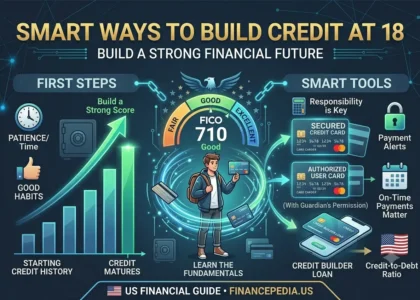
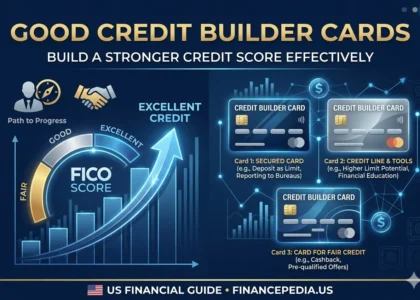
Most of the cards on this list require good to excellent credit, typically a FICO score of 670 or higher. If your credit score is below 670, start with a secured credit card to build your credit before applying.
The best cashback credit card in 2026 is whichever one fits your spending habits and financial goals. If simplicity is your priority, the Wells Fargo Active Cash delivers a reliable 2% on everything with no annual fee and no complications. If groceries drive your household budget, the Blue Cash Preferred’s 6% at supermarkets is unmatched. And if you enjoy maximizing rewards through strategic category management, the Discover it or Chase Freedom Flex will reward your effort generously.
Whatever card you choose, the most important rule is simple — pay your balance in full every month, use your card for purchases you were already going to make, and let the cashback work quietly in your favor all year long.
Disclaimer: Credit card terms, offers, and rewards rates are subject to change. Always verify current offers directly with the card issuer before applying. This article is for informational purposes only and does not constitute financial advice.