Whether you’re buying groceries, filling up your gas tank, paying for streaming subscriptions, or booking a vacation, you’re already spending money every day. The question is: are you getting rewarded for it?
Rewards and cashback credit cards allow you to earn valuable benefits on purchases you would make anyway. Instead of simply spending money, you can earn cash back, travel rewards, points, miles, and other perks that help stretch your budget further.
For many consumers, the right credit card can generate hundreds of dollars in rewards each year. Some cardholders earn enough rewards to cover flights, hotel stays, holiday shopping, or monthly bills without changing their spending habits.
However, choosing the best rewards and cashback credit card isn’t always easy. With dozens of options available, comparing reward rates, bonus categories, annual fees, welcome offers, and redemption options can quickly become overwhelming.
That’s why we’ve created this guide. We’ll explain how rewards and cashback credit cards work, compare their benefits, and help you choose the best option based on your financial goals and spending habits.
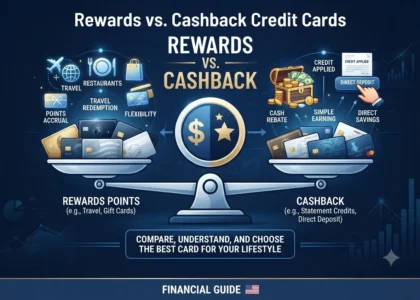
People often use “rewards” and “cashback” interchangeably, but they actually play by very different rules. Understanding how they split down the middle is the easiest way to figure out which one deserves a spot in your wallet.
Cashback cards are all about simplicity. Every time you swipe, you earn a flat percentage of that purchase back in actual dollars. If you rack up $200 in cashback over the year, that is a crisp $200 you can drop straight into your bank account, use as a statement credit, or request as a check.
There are no confusing conversion rates to calculate and no complex loyalty portals to navigate. Your earnings are worth exactly what they say they are.
Rewards cards trade cash for points or miles, and their actual value depends entirely on how you play the game.
A single point might only be worth one cent if you use it for a statement credit, but that same point could be worth two cents or more if you transfer it to an airline partner to book a flight. This flexibility gives rewards cards massive upside—but only if you are willing to invest the time to learn the system and strategically book your travel.
Rewards and cashback credit cards can provide significant value when used responsibly. Beyond the convenience of making purchases, these cards allow you to earn benefits, save money, and even improve your financial profile over time.
One of the biggest advantages of rewards and cashback credit cards is the ability to earn something back on spending you already do every day.
Whether you’re buying groceries, filling up your gas tank, dining at restaurants, shopping online, or paying for streaming subscriptions, many cards reward you for these purchases. Instead of spending money without receiving anything in return, you can earn cashback, points, or travel miles automatically.
Over time, these rewards can add up to hundreds—or even thousands—of dollars in value.
Many credit card issuers offer attractive sign-up bonuses to new cardholders.
For example, a card may offer a bonus such as:
“Earn $200 cashback after spending $500 within the first three months of account opening.”
These introductory offers can provide substantial value during your first year of card ownership and often make a new credit card even more rewarding.
Travel rewards credit cards often include benefits that go far beyond earning points.
Depending on the card, you may receive:
For frequent travelers, these benefits can significantly reduce travel costs and improve the overall travel experience.
Credit cards generally offer excellent security features to protect cardholders from unauthorized transactions.
Most major issuers provide:
These protections can provide peace of mind when shopping online or traveling internationally.
Using a rewards or cashback credit card responsibly can help you establish and improve your credit score over time.
Making payments on time and maintaining a low credit utilization rate demonstrates responsible credit management to lenders. A strong credit score can improve your ability to qualify for:
In the long run, building good credit can save you thousands of dollars through access to more favorable borrowing terms.
| Card | Best For | Rewards Rate | Annual Fee |
|---|---|---|---|
| Wells Fargo Active Cash | Best flat cashback overall | 2% on everything | $0 |
| Chase Sapphire Preferred | Best travel rewards overall | 1x–5x points | $95 |
| Citi Double Cash | Best for simplicity | 2% effectively | $0 |
| Blue Cash Preferred (Amex) | Best for groceries | 6% at supermarkets | $95 |
| Discover it Cash Back | Best first year value | 5% rotating + 1% | $0 |
| Chase Freedom Unlimited | Best everyday rewards | 1.5%–5% cashback | $0 |
| Capital One Savor | Best dining and entertainment | 3%–5% cashback | $0 |
| Capital One Venture | Best simple travel rewards | 2x–5x miles | $95 |
| Blue Cash Everyday (Amex) | Best no-fee grocery card | 3% supermarkets | $0 |
| Citi Custom Cash | Best single category spender | 5% top category | $0 |
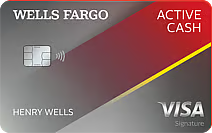
If you prefer a simple credit card that rewards every purchase without requiring you to track spending categories, the Wells Fargo Active Cash Card is one of the strongest options available.
The card earns an unlimited 2% cashback on all eligible purchases, making it easy to maximize rewards without worrying about activation requirements or spending limits. Whether you’re shopping online, paying utility bills, filling up your gas tank, or dining out, every purchase earns the same reward rate.
The card also includes a generous welcome bonus and cellphone protection when you use the card to pay your monthly phone bill.
Why we like it:
Best for: People who want simple, consistent rewards without managing bonus categories.
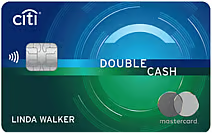
The Citi Double Cash Card has long been a favorite among cashback enthusiasts because of its unique rewards structure. Cardholders earn 1% cashback when they make a purchase and another 1% when they pay it off.
While the earning method is slightly different, the result is effectively the same—an impressive 2% cashback on purchases when balances are paid responsibly.
Another advantage is the ability to convert cashback into Citi ThankYou® Points, which can provide additional value for travelers.
Why we like it:
Best for: Cardholders who pay their balance in full every month.

For consumers looking to earn as much cashback as possible during their first year, the Discover it Cash Back card stands out.
The card offers 5% cashback in rotating quarterly categories such as grocery stores, gas stations, restaurants, Amazon purchases, and PayPal transactions. At the end of your first year, Discover automatically matches all cashback earned, effectively doubling your rewards.
This feature can make the card one of the most rewarding no-annual-fee credit cards available for new cardholders.
Why we like it:
Best for: New cardholders seeking maximum first-year value.

The Chase Freedom Unlimited strikes a balance between simplicity and bonus rewards.
Cardholders earn elevated rewards on dining, drugstore purchases, and travel booked through Chase Travel, while still earning rewards on all other purchases. The card also integrates seamlessly with Chase’s Ultimate Rewards ecosystem, making it a strong option for people who may want travel rewards in the future.
Why we like it:
Best for: Consumers looking for a versatile everyday credit card.
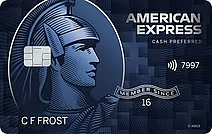
For families who spend heavily on groceries, few cards can compete with the Blue Cash Preferred Card.
The card offers one of the highest supermarket cashback rates available, along with rewards on select streaming services, gas stations, and transit purchases. Although it charges an annual fee, many households easily earn enough cashback to offset the cost.
If groceries represent a significant portion of your monthly budget, this card deserves serious consideration.
Why we like it:
Best for: Families and households with high grocery spending.

Not everyone wants to pay an annual fee for rewards. That’s where the Blue Cash Everyday Card shines.
The card provides rewards on groceries, online shopping, and gas purchases without charging an annual fee. It offers an excellent balance between everyday value and affordability.
Why we like it:
Best for: Budget-conscious consumers who want grocery rewards without paying an annual fee.

If restaurants, streaming subscriptions, concerts, and entertainment make up a large portion of your spending, the Capital One Savor Cash Rewards Card can be an excellent choice.
Unlike many cashback cards that focus primarily on groceries and gas, this card rewards consumers for enjoying experiences and entertainment.
Why we like it:
Best for: Food lovers, moviegoers, and entertainment enthusiasts.
The Citi Custom Cash Card takes a unique approach to rewards. Instead of requiring cardholders to select a category, the card automatically identifies your highest spending category each billing cycle and rewards it at a higher rate.
This flexibility makes it one of the smartest cashback cards for consumers whose spending habits change from month to month.
Why we like it:
Best for: Consumers with changing spending patterns.
The best cashback credit card depends on your spending habits and financial goals.
Before applying for any credit card, compare reward rates, annual fees, welcome bonuses, and redemption options to ensure the card aligns with your lifestyle.
The main difference is how you earn and redeem rewards. Cashback credit cards return a percentage of your spending as cash, while rewards credit cards earn points or miles that can be redeemed for travel, gift cards, merchandise, or statement credits. Cashback cards are generally simpler, while rewards cards often offer greater value for frequent travelers.
Yes, cashback credit cards can be worth it if you use them responsibly. They allow you to earn money back on everyday purchases such as groceries, gas, dining, and online shopping. When balances are paid in full each month, cashback rewards can provide significant savings over time.
Neither option is universally better—it depends on your lifestyle. Cashback credit cards are ideal for people who want simple, predictable rewards. Rewards credit cards are often better for travelers who can maximize the value of points and miles through airline and hotel programs.
Most rewards and cashback credit cards require good to excellent credit, typically a FICO score of 670 or higher. However, some entry-level rewards cards are available to consumers with fair credit scores.
Yes. Many people use multiple credit cards to maximize rewards in different spending categories. For example, you might use one card for groceries, another for travel, and a third for everyday purchases.
It depends on the card issuer. Many cashback credit cards allow rewards to remain active as long as your account stays open and in good standing. Always review the card’s terms and conditions to understand expiration policies.
Yes. Travel rewards credit cards can provide significant value through airline miles, hotel points, travel credits, airport lounge access, and travel insurance benefits. Frequent travelers often receive more value from rewards cards than from traditional cashback cards.
Many cashback credit cards allow rewards to be redeemed as a direct deposit into a linked bank account. Other redemption options may include statement credits, checks, gift cards, or online purchases.
Some do, while others don’t. Many excellent cashback credit cards have no annual fee. Premium rewards cards often charge annual fees but may offer valuable benefits that outweigh the cost for frequent users.
When you apply for a credit card, the issuer typically performs a hard inquiry on your credit report, which may temporarily lower your score by a few points. However, responsible credit card use can help improve your credit score over time.
Most rewards and cashback credit cards allow you to earn rewards on eligible purchases. However, certain transactions such as balance transfers, cash advances, fees, and interest charges generally do not qualify for rewards.
If you carry a balance, you’ll likely pay interest charges that can outweigh the value of any rewards earned. To maximize the benefits of a rewards or cashback credit card, it’s generally best to pay your balance in full every month.
Some credit cards offer unlimited cashback, while others place caps on bonus categories. For example, a card may offer 5% cashback on up to a certain spending amount each quarter before the rate decreases.
Cards with no annual fee and straightforward rewards structures are often the best choice for beginners. Flat-rate cashback cards are especially popular because they are easy to understand and require little effort to maximize rewards.
Start by reviewing your spending habits. If most of your expenses go toward groceries, dining, travel, or gas, look for a card that offers elevated rewards in those categories. Also compare annual fees, welcome bonuses, redemption options, and additional benefits before making a decision.
Rewards and cashback credit cards can be powerful financial tools when used responsibly. Whether you prefer simple cashback rewards or flexible travel points, choosing the right card can help you earn valuable benefits on purchases you’re already making. By understanding how these cards work and matching them to your spending habits, you can maximize rewards and get more value from every dollar you spend.