Building credit can feel overwhelming, especially if you are just starting your financial journey or trying to recover from a low credit score. Many traditional credit cards require good or excellent credit for approval, making it difficult for beginners to qualify. This creates a frustrating cycle where you need credit to build credit.
That is where good credit builder cards can make a real difference.
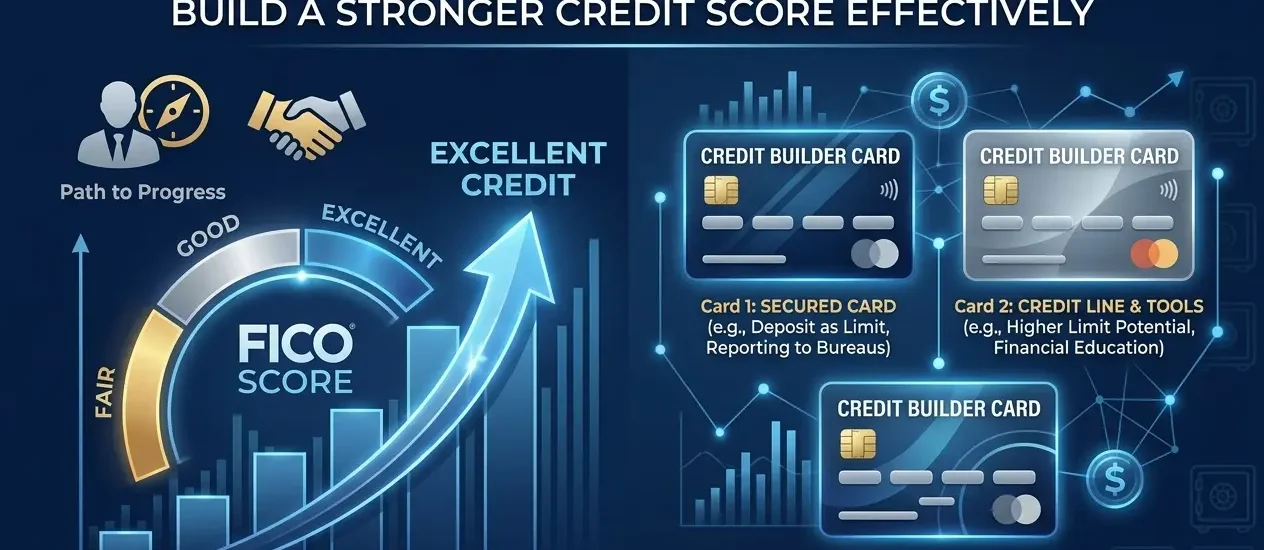
Credit builder cards are specifically designed for people with limited, fair, or poor credit history. These cards help users establish a positive payment history by reporting account activity to the major credit bureaus. When used responsibly, a credit builder card can help improve your credit score, increase your chances of approval for future loans, and unlock better financial opportunities over time.
Some credit builder cards are secured, meaning they require a refundable security deposit, while others are unsecured and designed for users with fair credit. Many of the best credit builder cards in 2026 also offer useful benefits such as cashback rewards, no annual fees, credit monitoring tools, and automatic credit limit reviews.
A credit builder card is a type of financial product intended especially for people who have little or poor credit history. Unlike regular credit cards, which normally need a good or excellent credit score in order to be approved, credit builder cards are simpler to obtain and help the user build or repair their credit record.
Some of the common reasons why people use credit builder cards include:
Having no previous credit history Being a student or a young person Being a first-time credit card owner Rebuilding credit after financial problems
The primary purpose of obtaining a credit builder card is not to give oneself access to big spending limits but rather to start building a good payment history since this is the key factor in calculating a credit score.
The majority of decent credit builder cards are sent to the following three credit reporting agencies:
Experian Equifax TransUnion
As long as you make timely payments and keep your credit utilization at a minimum, you can eventually get a good credit score, learn how to handle finances, and become eligible for other kinds of borrowing products such as credit cards or home loans.
How Do Credit Builder Cards Work?
At their core, credit builder cards function just like standard credit cards when you swipe them at a register, but their underlying mechanics are structured to reduce risk for bank issuers:
Reporting to the Big Three: Every month, the card issuer reports your payment habits to the three major credit bureaus: Equifax, Experian, and TransUnion.
The Impact of On-Time Payments: Because payment history makes up 35% of your FICO® score, making consistent, on-time payments every month is the single fastest way to climb the credit ladder.
Collateral and Guardrails: Many of these cards require a security deposit or link directly to a checking account to ensure you cannot spend money you don’t have.
7 Good Credit Builder Cards in 2026
1. Discover it® Secured — Best Overall
The Discover it® Secured remains the gold standard for credit building in 2026 because it acts like a premium rewards card while actively protecting your credit journey.
Security Deposit: $200 minimum (refundable).
Annual Fee: $0.
Why it’s great: Unlike most starter cards, it offers real cash back: 2% back at gas stations and restaurants (on up to $1,000 in combined purchases each quarter) and 1% back on everything else. Even better, Discover automatically matches all the cash back you earn at the end of your first year.
The Upgrade Path: Discover automatically reviews your account every month starting at day seven. If you’ve been responsible, they will refund your deposit and upgrade you to an unsecured card.
2. Capital One Platinum Secured
If you want the backing of a major bank but don’t want to tie up a massive amount of cash upfront, the Capital One Platinum Secured is an excellent choice.
Security Deposit: $49, $99, or $200 (depending on creditworthiness) for an initial $200 credit line.
Annual Fee: $0.
Why it’s great: It is one of the few cards that offers a partially secured option. If your credit profile qualifies, you could put down just $49 but still get a full $200 credit limit to start with.
The Upgrade Path: Capital One automatically reviews your account in as little as six months to consider you for a higher credit limit or a full transition to an unsecured card.
3. Chime Credit Builder Visa®
The Chime Credit Builder completely reimagines how a secured card operates, making it the perfect choice for anyone terrified of getting into credit card debt.
Security Deposit: No fixed deposit required. Your spending limit is equal to the money you move into your Chime account.
Annual Fee: $0 (0% APR).
Why it’s great: There is no hard credit check to apply. You simply move money from your Chime Checking Account over to your Credit Builder account, and that balance becomes your credit limit. When your bill is due, Chime automatically pays it off using that money.
The Secret Weapon: Chime does not report your credit utilization ratio to the bureaus—only your on-time payments. That means you can use the entire balance without accidentally hurting your score.
4. Petal® 2 “Cash Back, No Fees” Visa®
The Petal 2 Visa is built for people with no credit history who want a traditional, unsecured credit card right out of the gate.
Security Deposit: $0.
Annual Fee: $0.
Why it’s great: Petal uses a unique “Cash Score” system. Instead of just looking at your credit report, they can securely analyze your banking history (income, savings, and bills) to approve you.
Perks: You start with 1% cash back on eligible purchases, which scales up to 1.5% after you make 12 consecutive on-time monthly payments. Credit limits can scale all the way up to $10,000.
5. Self Credit Builder
Self isn’t actually a credit card; it is a Credit Builder Account wrapped inside a loan structure, making it ideal for pure savers.
Security Deposit: $0 upfront.
Annual Fee: Varies by plan.
How it works: Self holds a small loan for you in a locked certificate of deposit (CD). You make small, monthly payments to Self (e.g., $25/month) for 12 to 24 months, which Self reports as positive payment history. Once the term ends, you get your money back minus administrative fees.
Bonus Feature: Once you build up enough equity in your Self account, you can automatically qualify for the Self Visa® credit card without a credit check.
6. OpenSky® Secured Visa®
If your credit score has suffered severe damage and you keep getting rejected by major banks, OpenSky offers a fresh start with zero judgment.
Security Deposit: $200 minimum (refundable).
Annual Fee: $35.
Why it’s great: OpenSky requires no credit check and no bank account to apply. They boast an incredibly high approval rate because they rely entirely on your refundable security deposit to cover the risk. It is a pure, functional tool to get back into the credit system.
7. Kikoff Credit Builder
Kikoff is a low-cost, low-effort fintech option specifically engineered to target your credit utilization and payment history.
Security Deposit: $0.
Annual Fee: $0 (Subscriptions start at a few dollars a month).
How it works: Kikoff gives you a specific, small credit line (usually $750) that can only be used to buy items in the Kikoff store (like e-books or courses). By purchasing a tiny service and setting it to autopay, you create an instantly perfect utilization rate and a flawless string of on-time payments.
Secured vs. Unsecured Credit Builder Cards
Understanding the line between these two formats will save you money and protect your expectations:
Feature
Secured Credit Cards
Unsecured Credit Cards
Upfront Cash Required
Yes. A refundable security deposit is mandatory.
No. No deposit is required to open the line.
Credit Limit
Typically matches your deposit dollar-for-dollar.
Based entirely on income and credit risk.
Approval Odds
Extremely high (the deposit protects the bank).
Moderate to low (requires a cleaner history).
Best Suited For
Rebuilding bad credit or deep credit repair.
Establishing credit for the first time (thin file).
How To Use a Credit Builder Card Effectively
Simply owning a card won’t fix your credit score; how you interact with it determines your success. Use these rules to maximize your growth:
Keep Your Utilization Low: Your credit utilization ratio—how much of your available credit you actually use—accounts for 30% of your score. Try to keep your balance below 10% to 30% of your total limit at all times.
Automate Your Minimums: Set up automatic payments for at least the minimum statement balance so you never accidentally miss a due date.
Pay in Full Each Month: Credit builder cards often carry high variable APRs (often between 25% and 30%). To avoid paying a single cent in interest, pay your balance off down to zero every single month.
How Long Does It Take To Build Credit?
If you are starting completely from scratch, it generally takes around six months of consistent card activity for a FICO® score to be generated. If you are rebuilding credit after past delinquencies or a bankruptcy, seeing a substantial score increase can take anywhere from 12 to 24 months of spotless payment history.
Common Mistakes To Avoid
Maxing Out a Low Limit: If your secured credit limit is only $200, buying a $180 grocery haul will push your utilization to 90%, which actively pulls your score down.
Applying for Too Many Cards at Once: Every traditional application triggers a hard inquiry. Multiple inquiries in a short window signal financial desperation to credit bureaus.
Carrying a Balance on Purpose: There is an old myth that leaving a small balance on your card helps your score. It does not. It only costs you money in interest fees.
To provide the best experiences, we use technologies like cookies to store and/or access device information. Consenting to these technologies will allow us to process data such as browsing behavior or unique IDs on this site. Not consenting or withdrawing consent, may adversely affect certain features and functions.
Functional
Always active
The technical storage or access is strictly necessary for the legitimate purpose of enabling the use of a specific service explicitly requested by the subscriber or user, or for the sole purpose of carrying out the transmission of a communication over an electronic communications network.
Preferences
The technical storage or access is necessary for the legitimate purpose of storing preferences that are not requested by the subscriber or user.
Statistics
The technical storage or access that is used exclusively for statistical purposes.The technical storage or access that is used exclusively for anonymous statistical purposes. Without a subpoena, voluntary compliance on the part of your Internet Service Provider, or additional records from a third party, information stored or retrieved for this purpose alone cannot usually be used to identify you.
Marketing
The technical storage or access is required to create user profiles to send advertising, or to track the user on a website or across several websites for similar marketing purposes.