Most 18-year-olds in the U.S. have a basic grasp of filing taxes — or at least they know how to set up a bank account. However, if you ask them about how credit scores function, you’re likely to be met with confusion.
This isn’t their fault. Educational institutions overlook these crucial topics. And by the time it becomes essential — when you’re looking to rent your first place, buy your first car, or secure a loan — it’s often too late to learn.
The silver lining? If you’re 18 and reading this, you’re already taking a proactive step. Establishing credit early is a wise financial choice. The habits you develop now can lead to significant savings over your lifetime, potentially saving you thousands in lower interest rates.
This guide will walk you through the process of building credit at 18, step by step — including some techniques that many financial blogs tend to overlook.
Your credit score is a number between 300 and 850. Lenders, landlords, and sometimes even employers use it to decide whether to trust you with money or anything at all.
Here’s what that number can affect before you turn 25:
Right now, if you’ve never opened a credit account, you may be what the Consumer Financial Protection Bureau calls “credit invisible.” Around 26 million Americans have no credit file at all. The earlier you get out of that category, the better.
You don’t need a massive bank account to get in the game. Honestly, the biggest hurdle is just getting started. I’ve put together seven proven ways to make it happen—pick one or two and just dive in.
For college students or part-timers, a student credit card is your best first move. These cards are intended for people with little or no credit history. They have less strict requirements for approval, often no annual fee and some even give you cash back.
Best credit cards for students new to credit:
How to use it without hurting yourself:
The biggest mistake new cardholders make is treating a credit card like free money. It isn’t. Use it for one small, predictable expense every month — like gas or a streaming subscription. Then pay the full balance before the due date. Every time. No exceptions.
That habit alone — spending small, paying in full — will build your credit faster than almost anything else.
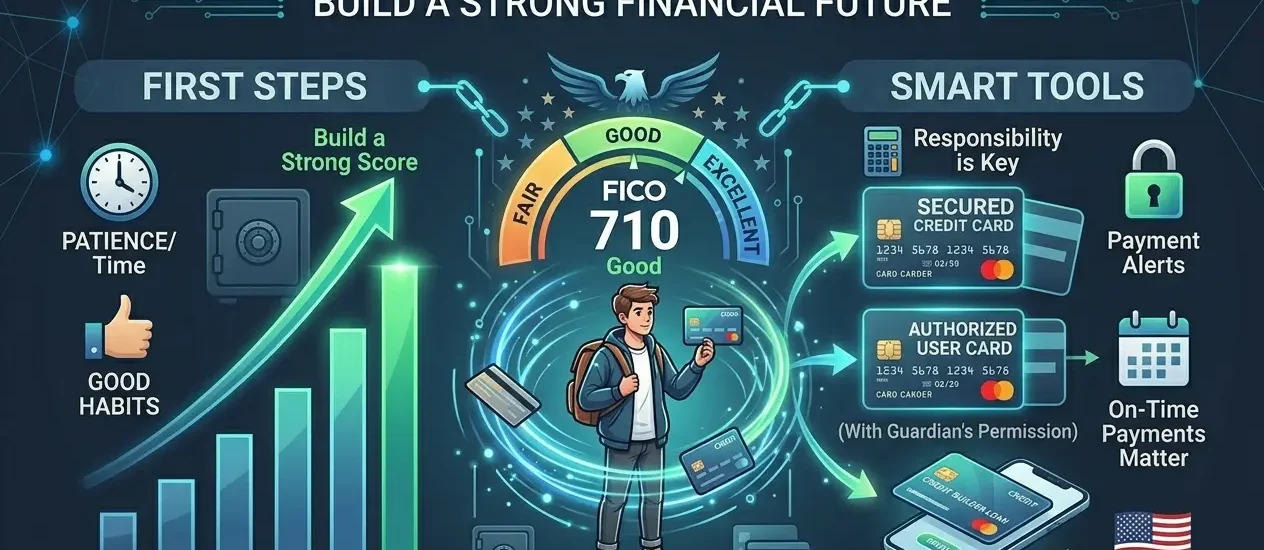
If you’re not a student or you don’t qualify for a student card, a secured credit card is the next best option.
Here’s the deal: You put down a cash deposit — typically $200 to $500 — and that deposit is your credit limit. You use the card like a normal credit card , the issuer reports your activity to the three major credit bureaus ( Equifax , Experian and TransUnion ) and your credit score builds up over time .
The deposit reduces the lender’s risk, so these cards are easy to obtain with no credit history.
Best Secured Cards of 2026:
Most people who start with a secured card and use it responsibly can graduate to a regular unsecured credit card in 6 to 12 months.
This is one of the fastest and easiest ways to build credit at 18, and a lot of young people don’t know it exists.
Ask a parent or trusted family member to add you as an authorized user on their credit card account. You don’t even have to use the card. As long as the primary cardholder keeps the account in good standing — paying on time, keeping the balance low — that positive history will show up on your credit report too.
Think of it as borrowing someone else’s good credit habits while you build your own.
One important thing to know: this only works if the primary cardholder is responsible. If they miss payments or max out the card, that negative history can also affect your credit score. Have an honest conversation before you ask.
Also, not all credit card issuers report authorized user activity to credit bureaus. American Express, Chase, Bank of America, and Capital One all do — so those are the best cards to ask about.
This one is a gap in most credit guides — including the big-name finance sites — so pay attention.
A credit-builder loan is a small loan (usually $300 to $1,000) where you don’t actually receive the money upfront. Instead, the lender holds the funds in a savings account while you make monthly payments. Once you’ve paid off the loan, you get the money. The whole point is to build a payment history.
It sounds backward, but it works really well — especially if you want to show installment loan history on your credit report alongside credit card history.
Best credit-builder loan services in 2026:
If you can afford $25–$35 a month and want to add an installment loan to your credit file without taking on real debt, this is a smart move.
If you have student loans, you’re already building credit — as long as you pay on time.
Student loans are installment loans, and they show up on your credit report. Making consistent monthly payments, even just the minimum, adds positive payment history to your file. This is one of the five factors that make up your FICO score, and it’s the most important one — payment history accounts for 35% of your total score.
Set up autopay the moment your loans enter repayment. Most federal loan servicers will even give you a 0.25% interest rate reduction just for enrolling in autopay.
Don’t wait for your first bill to arrive and forget it. One missed payment can stay on your credit report for seven years.
Most landlords don’t automatically report rent payments to credit bureaus. Which means millions of Americans pay their rent on time every month and get zero credit for it.
That’s starting to change, and you can take advantage of it right now.
Third-party services can connect to your bank account or payment history and report your on-time rent payments to the major credit bureaus. Some studies suggest this can add 20 to 40 points to a thin credit file.
Services that do this:
Most of these services cost $5 to $10 a month. If you’re already paying rent, it’s one of the easiest wins on this list.
This one is completely free and takes almost no effort — which is why it should probably be your first step, not your last.
Experian Boost is a free tool from Experian that lets you add utility payments, phone bills, and even eligible streaming service payments (like Netflix and Hulu) to your Experian credit file. These payments have always been part of your life — now they can actually help your credit score.
According to Experian, users see an average credit score increase of about 13 points after using Boost.
Go to Experian.com, create a free account, connect your bank account, and select which payments to add. Done. You’ll see the impact immediately.
This is especially useful if you’re just getting started and your credit file is thin.
Reading about credit is one thing. Actually doing something about it this month is another. Here’s a simple, week-by-week plan to go from zero to started:
| Week | What to Do |
|---|---|
| Week 1 | Go to AnnualCreditReport.com and check if you have a credit file. Sign up for Experian Boost — free, takes 5 minutes. |
| Week 2 | Apply for ONE card — either a student card if you qualify, or a secured card if not. Don’t apply for both at once. |
| Week 3 | Ask a trusted family member about being added as an authorized user. Even one good account on your file helps. |
| Week 4 | Set up autopay on your new card. Use it for one small purchase (under $30). Pay it off before the due date. |
Most guides avoid answering this directly. They say things like “it depends” and “there’s no fixed timeline.” That’s technically true, but not helpful.
Here’s a realistic picture based on consistent, responsible credit behavior:
| Timeframe | Realistic Credit Score Range |
|---|---|
| Month 1–5 | No score yet (FICO requires 6 months of activity) |
| Month 6 | 580–620 (fair — you exist now) |
| Month 12 | 640–680 (moving in the right direction) |
| Month 18–24 | 700+ is very achievable with clean payment history |
| Year 3–4 | 740–760 possible — qualifies for most premium cards |
Avoiding these mistakes is just as important as the steps above.
Don’t apply for multiple credit cards at once. Every time you apply for credit, the lender does a “hard inquiry” on your report. One or two is fine. Applying for five cards in a month signals desperation to lenders and can temporarily drop your score.
Don’t miss a single payment. Payment history is 35% of your FICO score. One 30-day late payment can drop your score by 50–100 points and stay on your report for seven years. Set up autopay. No excuses.
Don’t max out your credit card. Even if you pay it off every month, a high balance at statement close can hurt your credit utilization ratio. Try to keep your balance under 30% of your credit limit — ideally under 10%.
Don’t close your first credit card. Length of credit history is a factor in your score. The older your accounts, the better. Even if you get a better card later, keep your first card open and use it occasionally.
Don’t let anyone else use your card. If you’re the primary cardholder, you’re responsible. Their missed payments are your missed payments.
Can I build credit at 18 with no job?
Yes. You don’t need a full-time job to build credit. A secured credit card requires a deposit, not an income. Becoming an authorized user requires nothing from you financially. And Experian Boost works regardless of your employment status. Starting with a secured card and authorized user status is a solid combination with no income required.
What credit score do you start with at 18?
You don’t start with any credit score. Until you open a credit account and have at least six months of activity reported to the bureaus, you simply have no score — not a zero, just no file. Credit bureaus call this being “credit invisible.”
Is 650 a good credit score for an 18-year-old?
A 650 score is actually solid for an 18-year-old with less than a year of credit history. The national average FICO score is around 716, but that average includes people with decades of credit history. At 18, a score of 650 after your first year puts you ahead of most people your age.
How fast can an 18-year-old build credit?
You can have your first credit score within six months of opening your first account. From there, reaching 700 within 18 to 24 months is realistic if you pay on time every month and keep your balances low.