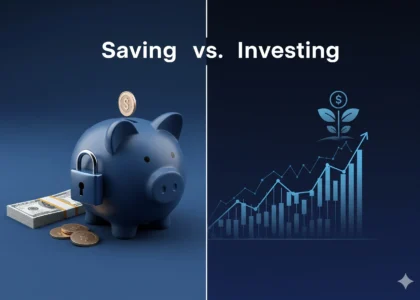
Finance is the management of money, investments, and financial resources. It involves activities like budgeting, saving, investing, and forecasting, all rooted in the time value of money. By analyzing risk and return, finance helps individuals and organizations make smart financial decisions for the future.
Finance is commonly classified into three main categories:-
An asset is anything of value owned by an individual or business, such as cash, real estate, or property. In a business context, assets are typically classified as either current assets or fixed assets.
Current Assets: Can be converted to cash within a year (e.g., cash, inventory, receivables).
Fixed Assets: Long-term, tangible items used in operations (e.g., buildings, machinery).
A balance sheet is a vital financial statement that offers a clear snapshot of a company’s financial health at a specific point in time. It outlines three key components: assets (what the company owns), liabilities (what it owes), and owners’ equity (the residual interest in the assets after deducting liabilities). By comparing assets and liabilities, stakeholders can assess the organization’s net worth or book value.
The Balance Sheet Equation:
The balance sheet follows a fundamental equation:
Assets = Liabilities + Owners’ Equity
Cash flow refers to the movement of money coming in and going out of a business or household—essentially, it’s the financial lifeblood that keeps operations running smoothly and ensures bills get paid.
Compound interest means earning or paying interest on both the original amount and the interest that builds up over time. Unlike simple interest, which is calculated only on the principal, compound interest grows with each period, as it includes previously accumulated interest. It can work in your favor when saving or investing, but it can also increase debt if you’re borrowing.
Liabilities are basically your financial responsibilities—what you owe to others. This could be anything from a business loan to unpaid invoices or even wages due to employees. In simple terms, it’s the opposite of assets. There are two main types:
Current liabilities are short-term debts that need to be paid within a year, like utility bills or credit lines.
Long-term liabilities are bigger commitments, like mortgages or multi-year loans, which are paid off over time.
Profit is the remaining amount after deducting all expenses from the total revenue—it’s the reward for effectively managing a business. It indicates whether an enterprise is generating income or suffering losses, typically detailed in a profit and loss account over a designated time frame.
Equity signifies ownership in a company or asset. In the realm of stocks, each share grants you a portion of ownership in a corporation. On a balance sheet, equity—often referred to as shareholders’ or owner’s equity is what remains after all liabilities are subtracted from the company’s total assets. It represents the genuine value that belongs to the owners or shareholders.
A liability is any financial obligation or debt a person or business owes. It can be short-term, like unpaid bills or loans due within a year, or long-term, such as mortgages or bonds. Managing liabilities wisely is crucial for maintaining financial health.
The history of finance dates back thousands of years, evolving alongside the development of human civilization. Ancient Mesopotamia, around 3000 BC, marked the earliest signs of financial systems, where records of trade and debt were kept on clay tablets. As societies grew, so did the complexity of financial transactions. The ancient Greeks and Romans introduced coinage, which helped streamline trade and establish more structured economic systems. During the Middle Ages, Italian merchants and bankers in cities like Venice and Florence laid the groundwork for modern banking by developing practices such as double-entry bookkeeping and issuing credit. The Renaissance period saw the rise of stock exchanges, notably the Amsterdam Stock Exchange in 1602, considered the world’s first. The Industrial Revolution further accelerated financial innovation, with the emergence of central banks, paper currency, and complex financial instruments. In the 20th and 21st centuries, finance transformed into a global industry with the rise of digital banking, fintech, and cryptocurrency, reflecting the rapid advancement of technology and globalization. Today, finance plays a vital role in economic development, investment, and wealth creation across the globe.
Personal finance is the art and science of managing your money in order to accomplish both short-term and long-term goals. It begins with understanding your current financial situation—how much money you make, what you’re spending, and how much you save From there, it’s about creating a plan that works within your income and lifestyle, helping you make smart decisions about spending, saving, and investing.
Personal financial planning is more than budgeting. It’s selecting the correct financial products—credit cards, insurance policies, home mortgages, and retirement accounts—to safeguard and build your wealth. Personal finance tools are frequently checking and savings accounts, IRAs, 401(k)s, and other investment vehicles intended to secure your future.
While personal finance has become a specialized and professional discipline nowadays, its history traces back to early school courses called “home economics” or “consumer economics.” These subjects were earlier downgraded, particularly because they dealt with household management and were mainly imparted to women. However, today financial literacy is not only understood as vital for personal welfare but also for the welfare of the entire economy.
In essence, personal finance empowers people to take control of their financial lives, make informed decisions, and build a stable future.
Corporate finance is all about how businesses manage their money, make investment decisions, and fund their operations. The goal is to improve company performance and maximize value for shareholders, all while balancing risk and return.
Raising funds through loans, bonds, or selling shares
Managing assets and liabilities for smooth operations
Investing in projects with high return potential
Balancing profit and risk
The federal government plays a crucial role in preventing market failures by managing the allocation of resources, ensuring fair income distribution, and stabilizing the overall economy. To fund these efforts, the government primarily relies on tax revenues.
According to the Tax Policy Center, taxation remains the main source of federal funding. However, the government also finances its operations through borrowing from banks, insurance companies, and other nations, as well as by earning dividends from government-owned enterprises.
In addition to federal revenue streams, state and local governments receive financial support through federal grants and aid. They also generate income through various other sources, including:
These diverse revenue streams help ensure the smooth functioning of public services and the overall economy.
Social finance is an investment strategy that aims to achieve both financial return and positive social or environmental benefit. It supports initiatives such as affordable housing, education, healthcare, and sustainability—filling the space between purpose and profit.
Social finance investments typically flow to social enterprises, nonprofits, or cooperatives via equity or debt financing. These initiatives create meaningful impact while providing returns to investors.
– Impact Investing: Financing groups addressing worldwide problems with measurable outcomes.
– Microfinance: Miniature loans to small entrepreneurs in neglected areas, facilitating self-sustainability and economic growth.
– Social Impact Bonds (SIBs): Investors pay for social programs and get paid by the government only when results are achieved.
Social finance represents an emerging trend to leverage money as a tool for good—where investing is not just about profit, it’s about impact.
Behavioral finance is a powerful field that combines psychology and economics to explain why people often make irrational or emotionally driven financial decisions. While traditional finance assumes that investors are logical and always act in their own best interest, actual behavior too often has a different story.
This approach gained momentum when specialists started observing that traditional financial theories couldn’t fully explain certain market behaviors and anomalies- such as bubbles, crashes, or sudden price swings. Real people don’t always act like the ideal “economic man” who makes perfectly rational choices. Instead, their decisions are shaped by emotions, cognitive biases, and psychological shortcuts.
Overconfidence – Overestimating our knowledge or skills, leading to risky choices
Herd Mentality – Copying others’ decisions rather than thinking independently
Loss Aversion – The pain of losing something feels stronger than the pleasure of gaining the same thing.
Anchoring – Relying too heavily on initial information when making decisions
Pioneers like Daniel Kahneman, Amos Tversky, and Richard Thaler laid the foundation for this field. They introduced concepts like mental accounting, the endowment effect, and various cognitive biases that deeply influence how people think about and manage money.
Finance is usually considered a science due to its reliance on data, logic, and mathematical models in analyzing how money flows through individuals, businesses, and markets. Like other sciences, it uses structured methods to analyze relationships—such as how risk, interest rates, or market forces influence financial outcomes.
Fundamental financial concepts and techniques—such as the Black-Scholes model, CAPM, and efficient market hypothesis—are constructed upon mathematical, statistical, and economic principles. Quantitative finance and econometrics are also areas that further emphasize finance’s scientific nature, employing data-based models to predict and solve actual problems.
However, finance isn’t purely science. Human emotions, behavior, and market sentiment also play a major role—something traditional theories often overlook. This is where finance intersects with psychology, leading to the rise of behavioral finance, which adds depth to the understanding of financial decision-making.
In essence, finance is both a science of numbers and logic, and a study of human behavior—making it a unique blend of precision and unpredictability.
When most people think of finance, they picture spreadsheets, formulas, and lots of math. And sure, there’s plenty of that. But finance isn’t just about numbers—it also has a creative side. That’s where the art of finance comes in.
Not all money decisions can be calculated. Sometimes, it’s about listening to your gut, reading the room, or recognizing the emotions surrounding the money. A good investor doesn’t just look at charts—they read the mood of the market. A good financial planner doesn’t just create budgets—they assist individuals in planning for dreams, fears, and life’s surprises.
Real-life situations rarely follow clean financial models. People panic-sell, trends come out of nowhere, and businesses have to make tough calls based on gut feelings as much as data. That’s why experience, emotional intelligence, and creativity play a big role in making smart financial choices.
In the end, finance as an art is about blending logic with people skills. It’s the ability to adapt, think outside the box, and make thoughtful decisions—especially when things aren’t black and white.
Investment Banker: Investment bankers help companies raise money, facilitate mergers and acquisitions, and offer strategic financial advice. It’s a high-energy, high-reward job that involves negotiating deals worth millions.
Financial Analyst: A financial analyst has a major role in assessing financial information, predicting trends, and advising companies to make wise investment choices. Their advice aids businesses in growing with less financial risk.
Accountant : Accountants oversee financial documents, maintain tax compliance, and compile detailed reports for stakeholders. Auditors, conversely, emphasize accuracy and integrity of financial information, ensuring businesses’ compliance with regulations and best practices.
Financial Planner : Financial advisors directly assist individuals in crafting customized financial plans. From investing to retirement funds, they guide clients in making intelligent, well-informed choices for the future.
Risk Manager: Risk managers identify threats to the business and formulate tactics to reduce risk. This might include studying the market trend, compliance matters, credit risk, or operational vulnerabilities.
What is the difference between finance and accounting?
Although accounting and finance go hand in hand, they are distinct.
Accounting is more interested in recording, classifying, and summarizing financial transactions. It’s based on past information to create true financial statements and maintain regulatory compliance.
Finance is looking to the future. Finance entails analysis of financial data for making decisions, investment planning, risk management, and long-term growth.
In simple terms:
Why should everyone learn finance?
Because it affects every part of your life. Learning finance helps you manage your money better, avoid unnecessary debt, save for things that matter, and build long-term wealth. It gives you control over your future—whether you’re planning for a vacation, buying a home, or saving for retirement.
Simply put, the more you understand money, the better choices you can make with it.