In the world of investing and wealth building, one term that frequently comes up is Asset Management Company (AMC). But what exactly is an AMC, and how does it help individuals and institutions grow their wealth? Whether you are a beginner investor or simply looking to understand how professional money management works, this article breaks down everything you need to know about asset management companies, including their structure, services, and the role of asset management company stocks in your investment portfolio.
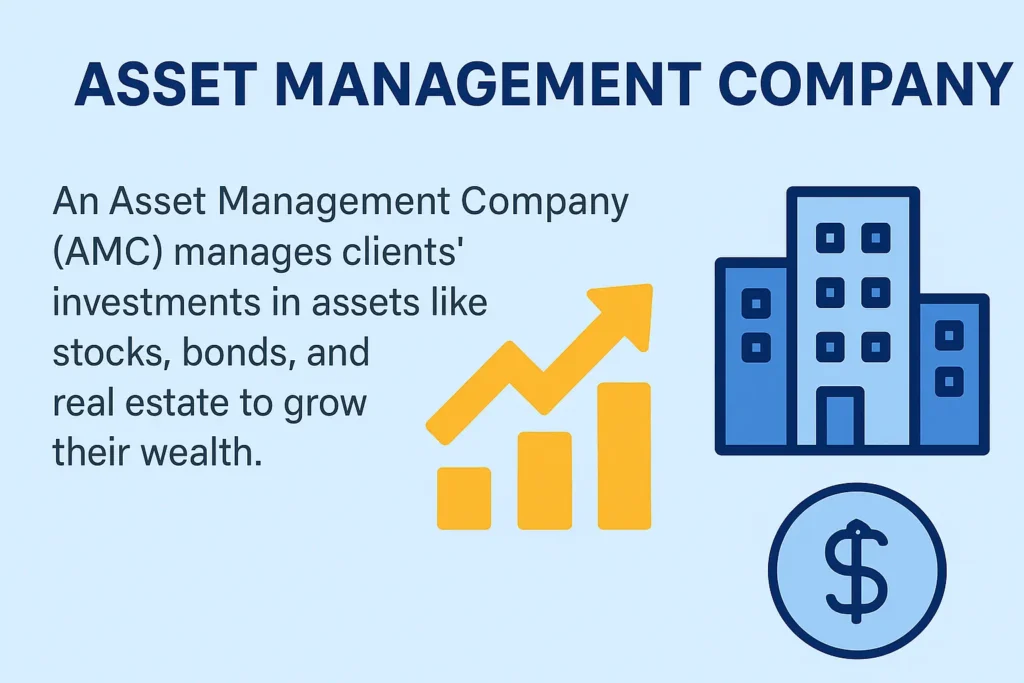
An Asset Management Company (AMC) is a financial firm that manages investments for a wide variety of clients, including retail investors, high-net-worth individuals (HNWIs), corporations, and institutions. These firms invest in assets like stocks, bonds, and real estate to help clients achieve their financial goals based on their risk tolerance and time horizon.
AMCs pool money from various clients and strategically allocate it across a wide range of securities, including:
A key area of interest for many investors is asset management company stocks, which offer exposure to the financial services sector and can be a strategic part of a diversified investment strategy.
AMCs employ teams of financial experts, including fund managers, research analysts, and portfolio strategists who conduct deep market research and analysis. The following is a detailed look at their step-by-step process:
Pooling of Funds
AMCs gather capital from individual and institutional investors to form a larger investment pool for diversified portfolio management.
Target individual investors through products like mutual funds and ETFs. Examples include:
They provide asset management services to large-scale clients such as corporations, government bodies, and pension funds.
Specialized firms offering niche or alternative investment strategies.
These firms provide comprehensive financial planning alongside asset management services for affluent individuals.
Investing in asset management company stocks can also provide indirect exposure to these services and generate potential dividends.
AMCs employ seasoned professionals who use advanced analytics and data to drive smart investment decisions.
Pooled investing spreads risk across different sectors, including exposure to asset management company stocks.
AMCs make it easy for small investors to participate in professionally managed portfolios.
Investment portfolios are carefully tailored to match each investor’s risk tolerance, financial goals, and investment horizon.
Investors can enjoy passive wealth growth without tracking market trends daily.
Investors in asset management company stocks may also benefit from these income streams through dividend payouts.
Always read the fund’s prospectus and understand its risk profile before investing.
Consider the following factors:
| Company | Assets Under Management (AUM) |
| BlackRock | $10+ Trillion |
| Vanguard Group | $8+ Trillion |
| Fidelity Investments | $4+ Trillion |
| State Street Global | $4+ Trillion |
| J.P. Morgan Asset Mgmt | $3+ Trillion |
Many investors include asset management company stocks like BlackRock (BLK) and State Street (STT) in their portfolios for long-term capital appreciation and dividend income.
An Asset Management Company (AMC) plays a crucial role in today’s investing landscape. From offering professional portfolio management to simplifying access to diversified assets — including asset management company stocks — AMCs help investors of all levels grow and protect their wealth.
However, it’s vital to perform due diligence, assess risk, and choose an AMC aligned with your financial goals. Whether you’re saving for retirement, planning for major life goals, or simply building long-term wealth, an AMC can be a key partner in your financial journey.
Looking to invest smartly? Explore our expert guides on Financepedia.us to make informed financial decisions.